
If your business uses compressed air, steam or other pressurised systems, the Pressure Systems Safety Regulations 2000 (PSSR) almost certainly apply to you. Pressure equipment stores a huge amount of energy, and when it fails it can cause serious injury and costly damage.
PSSR places a legal duty on the user or owner of a pressure system to prevent that from happening. Two of the most important requirements are a valid Written Scheme of Examination (WSE) and regular thorough examinations by a competent person.
At LiftTech Inspection Services, our Engineer Surveyors carry out PSSR inspections for businesses across Norfolk, Suffolk, Cambridgeshire and Essex. Here is a simple guide to what the law requires and how we can help.
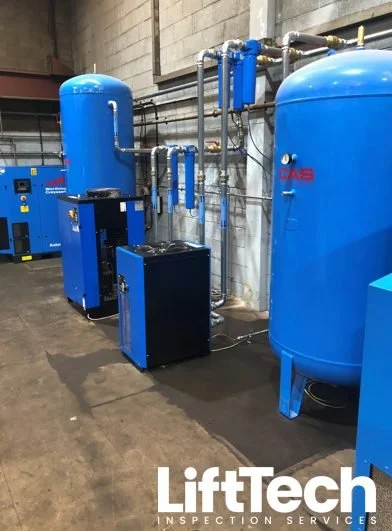
What is a Written Scheme of Examination?
A Written Scheme of Examination is a document, required under Regulation 8 of PSSR, that sets out how a pressure system must be inspected. It must be drawn up or certified as suitable by a competent person before the system is first used.
Who can certify a Written Scheme? The IEng requirement
This is where many businesses are caught out. Anyone with enough knowledge of the system can draw up a Written Scheme of Examination, but it must then be certified as suitable by a competent person.
HSE's Approved Code of Practice and guidance (L122) identifies Incorporated Engineer (IEng) as the suitable qualification level for the person certifying a scheme for a minor system, the category most compressed air systems fall into. Intermediate and major systems call for a higher level of expertise, typically Chartered Engineer (CEng).
Not every inspection company meets this. Some issue schemes signed off by an examiner without engineering registration, leaving you with a scheme that may not stand up to scrutiny from HSE or your insurer.
At LiftTech, our Written Schemes are certified in-house by an Engineering Council registered Incorporated Engineer, and we have access to Chartered Engineers for more complex systems. When you receive a scheme from us, you can be confident it has been certified at the right level.
A WSE should cover:
Which parts of the system must be examined, including pressure vessels, protective devices (such as safety valves) and pipework where a defect could cause danger
The nature of each examination and any preparation needed, such as isolating or draining the system
The maximum interval between examinations
Any examinations needed before the system is used for the first time
The scheme is not a one-off document. It should be reviewed whenever the system is modified, repaired or its use changes, so that it always reflects the equipment actually in service.
What is a PSSR thorough examination?
A thorough examination is the inspection carried out in line with the Written Scheme, as required by Regulation 9 of PSSR. Our Engineer Surveyor checks the condition of the equipment and confirms it is safe to keep operating until the next examination.
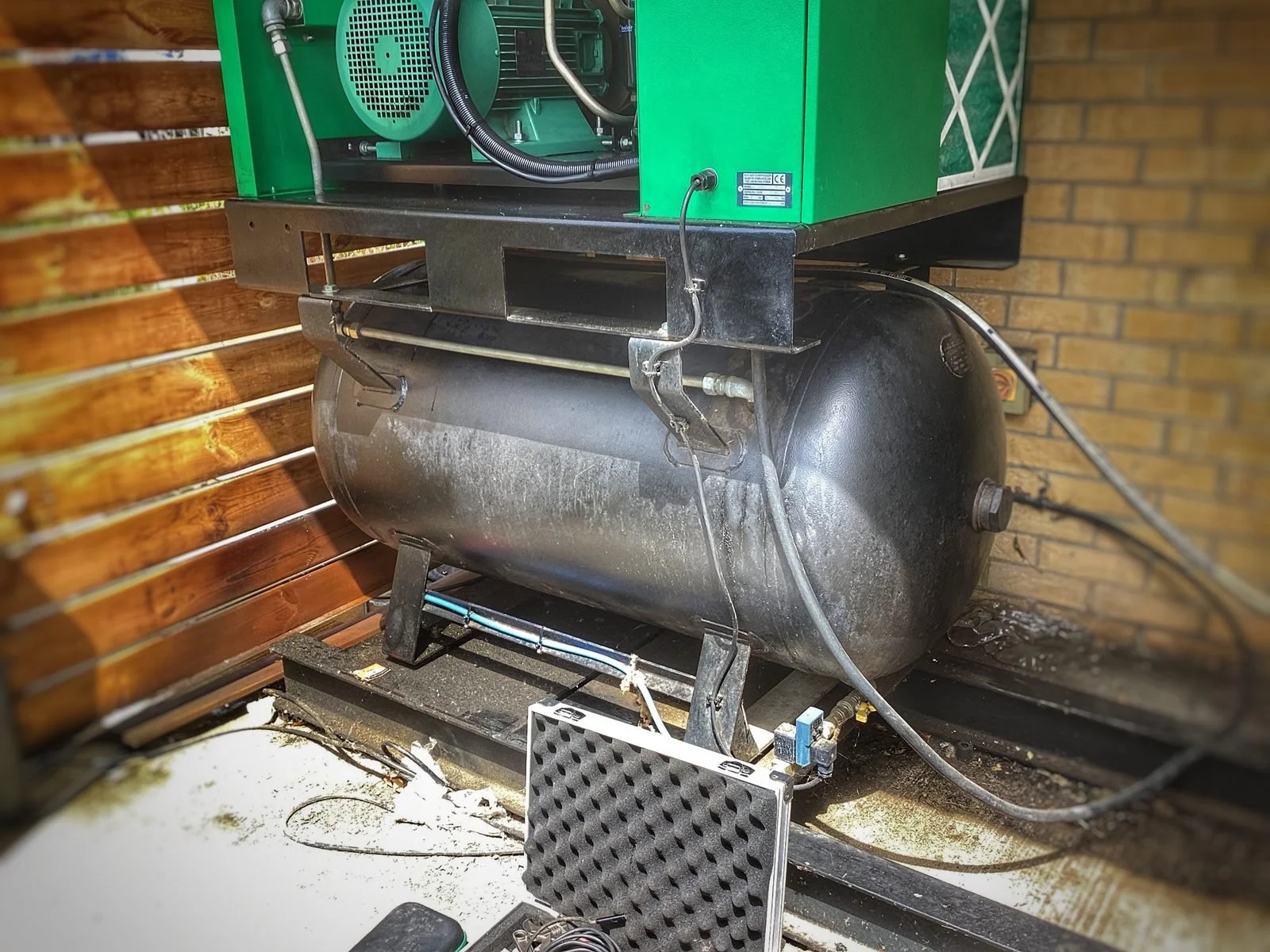
Depending on the scheme, this can include:
An external visual inspection of vessels, pipework and fittings
An internal inspection where access is possible
Checks on safety valves, pressure gauges and other protective devices
Thickness testing or other non-destructive testing where needed
After the examination you receive a written report. If we find a defect that presents imminent danger, the system must not be used until it is put right, and we are legally required to notify the enforcing authority.
Example: what does the law require for an air receiver?
Air receivers are the most common pressure vessels we inspect. Almost every workshop, garage, farm and factory with a compressor has one, so they are a good example of how PSSR works in practice.
Does PSSR apply? Compressed air above 0.5 bar is a "relevant fluid" under PSSR. A Written Scheme of Examination is needed when the pressure (in bar) multiplied by the internal volume (in litres) of the largest vessel is more than 250 bar-litres.
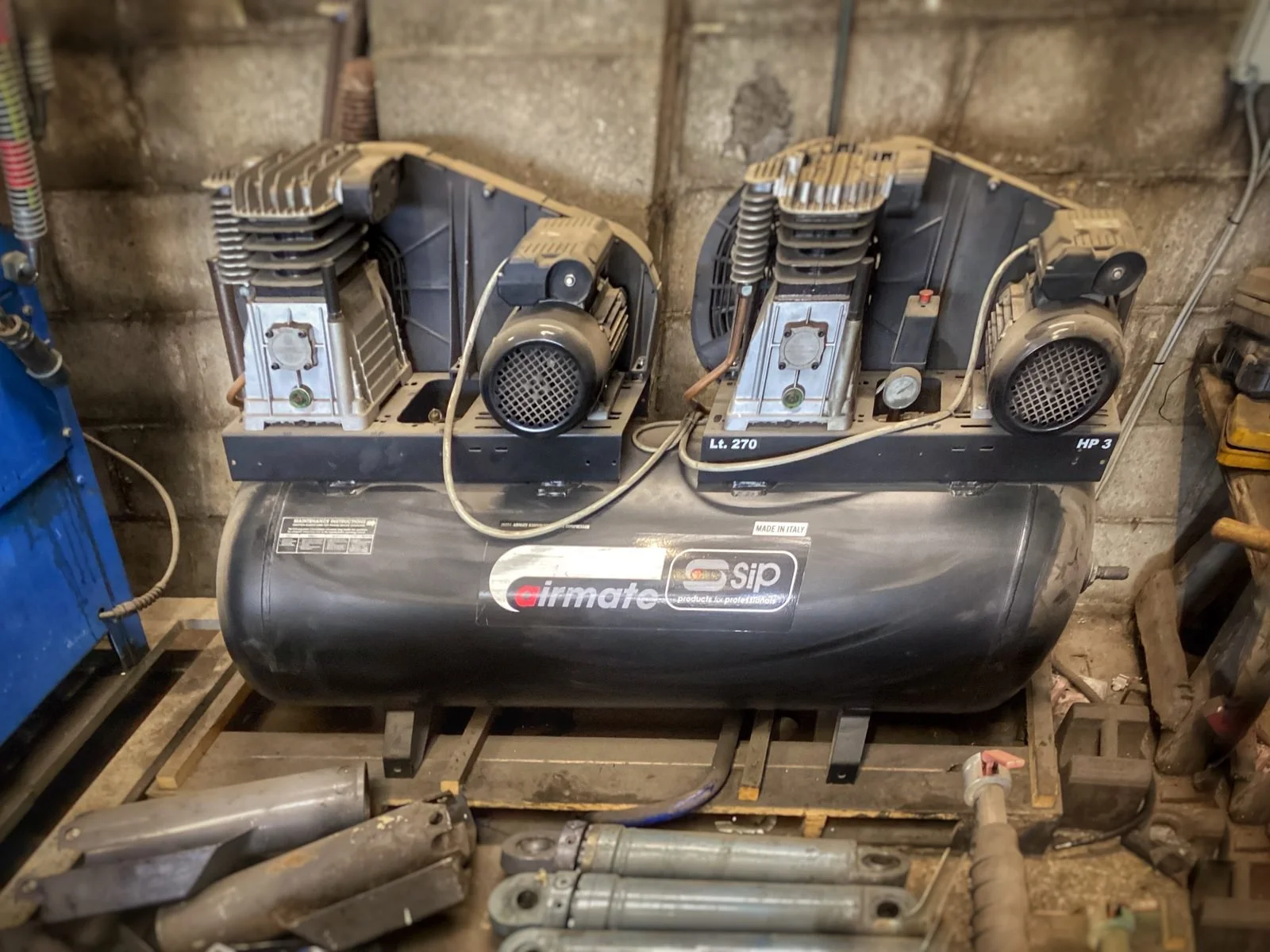
For example, a 270-litre receiver working at 10 bar gives 2,700 bar-litres, well over the threshold. Even small receivers often cross this line, so it is always worth checking.
What the user or owner must do:
Have a Written Scheme of Examination drawn up or certified by a competent person before the receiver is used.
Know the safe operating limits, including the maximum working pressure stamped on the data plate.
Fit and maintain protective devices, such as a safety valve set at or below the maximum working pressure and a working pressure gauge.
Arrange thorough examinations at the intervals set in the scheme. For many air receivers this is around every 24 months, but the scheme decides, based on the receiver's age, condition and use.
Maintain the system in good repair, including draining condensate regularly to prevent internal corrosion.
Keep records of the scheme and the latest examination reports, available for inspection.
A typical air receiver examination includes checking the data plate, inspecting the shell, welds and supports for corrosion or damage, checking the safety valve and gauge, and an internal inspection or thickness testing where the scheme requires it.
Pressure systems we inspect
Our Engineer Surveyors can prepare Written Schemes of Examination and carry out thorough examinations on a wide range of pressure plant, including:
Air receivers and compressed air systems
Air/oil receivers and separators
Air/paint pressure pots
Shot and media blast vessels
Autoclaves and sterilisers
Calorifiers
Expansion vessels
Tyre bead seaters (Cheetahs)
Nitrogen generation systems and storage vessels
Process vessels
Protective devices, including safety valves, pressure relief valves and pressure gauges
PSSR inspections across East Anglia and Essex
Based in Norwich, we carry out PSSR inspections on site for businesses throughout East Anglia and Essex, including:
Norfolk: Norwich, Great Yarmouth, King's Lynn, Thetford, Dereham, Cromer and North Walsham
Suffolk: Ipswich, Lowestoft, Bury St Edmunds, Stowmarket, Beccles and Diss
Cambridgeshire: Cambridge, Ely, Peterborough and Wisbech
Essex: Chelmsford, Colchester, Braintree, Harwich and Clacton-on-Sea
We work with manufacturers, agricultural businesses, garages and workshops, food producers, healthcare and dental practices, and facilities managers.
Why choose LiftTech for your PSSR inspections?
Independent and local: a Norwich-based inspection body with experienced Engineer Surveyors, in-house IEng certification of Written Schemes and access to CEng support
One provider for your statutory inspections: PSSR, LOLER, PUWER and COSHH LEV examinations in a single visit where possible
Clear, practical reports: plain-English findings so you know exactly what needs doing
Reminders before you're due: we help you stay compliant without chasing dates
Not sure whether your equipment needs a Written Scheme of Examination, or if your current scheme is still valid? Get in touch and one of our Engineer Surveyors will be happy to help.
Call us on 01603 555810 or send an enquiry today to book your PSSR inspection.